615.1K
Downloads
976
Episodes
Official podcast for climate heroes from Citizens' Climate Lobby. We're creating the political will for a livable world.
Episodes
Dec 10, 2021
Dec 10, 2021
32 min
Join CCL Research Coordinator Dana Nucitelli for a review of a new tool from Dr. Drew Shindell's lab that helps advocates display on the state-level climate co-benefits. Dr. Shindell's research is one of the main underpinnings behind CCL's emphasis that carbon pricing also helps clean the air and saves lives based on his recently published peer-reviewed article in PNAS: Temporal and spatial distribution of health, labor, and crop benefits of climate change mitigation in the United States.
Skip ahead to the following section(s):
(0:00) Intro & Agenda
(2:07) About Dr. Shindell's Team
(5:01) Overview of the Results
(7:25) Value of a Statistical Life
(12:12) Introducing the Tool
(15:29) Explaining the Scenarios
(22:53) Choosing Your Impact
Tool: http://shindellgroup.rc.duke.edu/apps/decarb/
PNSA Article: https://www.pnas.org/content/118/46/e2104061118
Presentation Slides: http://cclusa.org/state-climate-health-tool
CCL Community Page: https://community.citizensclimate.org/resources/item/19/425
Dec 3, 2021
Dec 3, 2021
48 min
Join Citizens' Climate International's Global Strategy Director Joseph Robertson, Cathy Orlando, Citizens’ Climate International Program Director, Isatis Cintron, CCI Board Member and Latin American Regional Coordinator and Solemi Hernandez CCL Southeast Regional Coordinator for an update and review on all that happened at COP26 and how it connects with CCL's work.
Skip ahead to the following section(s):
(0:00) Agenda and Intro
(1:33) What is COP and Why is it important?
(7:50) COP26 Outcomes & Article 6.8
(12:20) Canada
(20:59) ACE - Action for Climate Empowerment
(36:20) People's Pavilion
(42:14) Road to COP27 and Conclusion
Presentation Slides: https://cclusa.org/cop-26-slides
CCL Community Page: https://community.citizensclimate.org/resources/item/19/383
Background reading:
https://www.citizensclimateintl.news/p/cci-welcomes-cop26-commitments-to
https://www.citizensclimateintl.news/p/glasgow-outcomes-need-to-protect
Nov 23, 2021
Nov 23, 2021
30 min
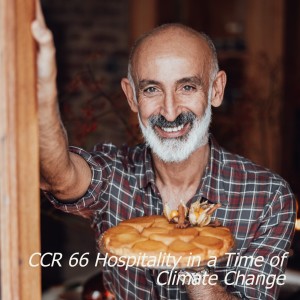
We live in a world with stronger and more frequent extreme weather events. As a result, giving and receiving hospitality is becoming the new normal for humans. Citizens’ Climate Radio host Peterson Toscano speaks with public theologian Jayme R. Reaves and public health expert Dr. Natasha DeJarnett. What are the risks leading to more displacement? What are the dilemmas and challenges of housing, feeding, and creating more space for people uprooted from homes during extreme weather? And what are some of the creative ways communities provide protection to those temporarily or permanently unhoused?
Jayme R. Reaves is the director of academic development at Sarum College in Salisbury, England. She teaches in areas such as biblical studies, and feminist and liberation theology. Over the last 20 years, she has worked as a consultant, researcher, lecturer, and facilitator in the U.S., former Yugoslavia, Northern Ireland, and Great Britain. Her focus internationally has been on the intersections between theology and public issues such as peace, conflict, hospitality, memory, and gender.
Jayme discusses the roles that scarcity and abundance play in making sure that those most impacted by the environment in the community around us are cared for. She calls on churches to work in their own communities to make congregations aware of sharing with those who don’t have as much.
Jayme regularly speaks, leads retreats, conducts workshops, and acts as “theologian in residence” with communities who wish to dive deeper into understanding theological frameworks for social justice activism. She's the author of Safeguarding the Stranger: An Abrahamic Theology & Ethic of Protective Hospitality (Wipf & Stock, 2016) and co-editor of When Did We See You Naked?: Jesus as a Victim of Sexual Abuse (SCM, 2021).
Additionally, she co-hosts the podcast Outlander Soul, which looks at the Outlander series by Diana Gabaldon with a theological, religious, and spiritual lens and takes seriously the role fiction plays in fans’ lives as a sacred text. Jayme lives in Dorset, England with her partner and two dogs.
Dr. Natasha DeJarnett is an assistant professor in the Christina Lee Brown Environment Institute at the University of Louisville Division of Environmental Medicine, researching the health impacts of extreme heat exposure and environmental health disparities. Additionally, she is a professorial lecturer in Environmental and Occupational Health at the George Washington University Milken Institute School of Public Health. Previously, Dr. DeJarnett was the interim associate director of Program and Partnership Development at the National Environmental Health Association, leading research, climate and health, and children’s environmental health.
She also previously served as a policy analyst at the American Public Health Association (APHA), where she led the Natural Environment portfolio, including air and water exposures along with climate change. Dr. DeJarnett is a member of the EPA’s Children’s Health Protection Advisory Committee, is chair of the Governing Board of Citizens’ Climate Education, a member of the Board of Directors of Physicians for Social Responsibility, chair-elect for APHA’s Environment Section, member of the Advisory Board of APHA’s Center for Climate, Health and Equity, a member of the Board of Trustees for the BTS Center, special advisor to the Environmental Health and Equity Collaborative, and the Steering Committee of the International Transformational Resilience Coalition.
Dr. DeJarnett emphasizes that more than ever before, people are being displaced as a result of severe weather phenomena caused by climate change. In 2018, 16 million people were displaced due to climate, 1.2 million of which were American. She points out that in 2020, more hurricanes and tropical storms made landfall than ever before, to the point where letters in the Greek alphabet were being used to name them, as the list of hurricane names had been used up. Dr. DeJarnett says that church communities are presented with the opportunity to provide hospitality more than ever by turning churches into cooling centers, and by educating the community about staying safe through weather phenomena.
To learn more about building community resilience see the US Climate Resilience Toolkit or see how you can get involved with establishing a local or regional Climate Resilience Hub.
The Art House
Joining us in the Art House is Dr. Krista Hiser with The Ultimate Cli-Fi Book Club. The purpose of the book club is to look at climate-themed literature and consider how it can help us engage differently with interdisciplinary topics and existential threats related to the planetary predicament of climate change.
In this episode, Krista reflects on Deena Metzger’s novel A Rain of Night Birds.
Dr. Krista Hiser is Professor at Kapiʻolani Community College. Her Ph.D. is in Educational Administration from the University of Hawai‘i at Mānoa. She has published works on community engagement, service-learning, organizational change, post-apocalyptic and cli-fi literature.
In this month’s episode, Krista tells us that the protagonist of “A Rain of Night Birds” is a scientist that also relies on feeling to gauge the environmental phenomena around her. With themes of spiritualism and indigenous culture, this “literature of restoration” focuses on the concept of doing no harm, based on the importance of the world around us.
You can read a written version of Krista’s essay at The Ultimate Cli-Fi Book Club for Sustainability in Higher Education on Medium. You can hear standalone versions of The Art House at Artists and Climate Change.
Good News Report
Our good news comes from Anthony Leiserowitz at Yale Climate Connections. In tune with the theme of hospitality, Anthony discusses a disaster resiliency program geared toward Spanish-speaking residents in Sonoma County, California.
Whether people lose power or work as a result of climate and weather disasters, many nonprofits are developing plans and guides to help Spanish speakers in the west prepare. These programs help residents sign up for emergency alerts, prepare for emergencies, and make financial arrangements needed to safely leave during severe weather.
We always welcome your thoughts, questions, suggestions, good news, and recommendations for the show. Leave a voicemail at (518) 595-9414 (+1 if calling from outside the U.S.). You can email your answers to radio @ citizensclimate.org
You can hear Citizens’ Climate Radio on iTunes, Spotify, Stitcher Radio, SoundCloud, Podbean, Northern Spirit Radio, Google Play, PlayerFM, and TuneIn Radio. Also, feel free to connect with other listeners, suggest program ideas, and respond to programs in the Citizens’ Climate Radio Facebook group or on Twitter at @CitizensCRadio.
Photo by furkanfdemir from Pexels
Nov 16, 2021
Nov 16, 2021
20 min
Dr. Katharine Hayhoe, The Nature Conservancy's Chief Scientist and Atmospheric Scientist and Professor, Texas Tech University, shares her takeaways from COP26 and reviews her latest book, "Saving Us."
In SAVING US: A Climate Scientist's Case for Hope and Healing in a Divided World Dr. Hayhoe draws upon interdisciplinary research and personal stories to demonstrate that whether you’re a parent or a person of faith, a beachgoer or a sports fan, a foodie or a travel junkie, climate change affects someone or something you care about, which means you already have power to act for change. While other books in this space offer doomsday scenarios, Hayhoe ‘s approach is optimistic and inclusive. She argues that climate action isn’t about being a certain type of person or voting a certain way. It’s about connecting with our communities based on the values we already have, to inspire collective action.
Order your copy of the book here: https://www.simonandschuster.com/books/Saving-Us/Katharine-Hayhoe/9781982143831
Dr. Hayhoe's TIME Essay: https://time.com/6089999/climate-change-hope/
Global Weirding on YouTube: https://www.youtube.com/channel/UCi6RkdaEqgRVKi3AzidF4ow
Hear about CCL’s vision forward and how we’ll get there.
w/ Mark Reynolds CCL Executive Director and Madeleine Para CCL President
Share your ideas for CCL's future focus: https://docs.google.com/forms/d/e/1FAIpQLSdR7E9kfAcvF_3uNzaxmqzoNeuElWjTv9JcPOgnSofv_t9Huw/viewform
#SavingUs #KatharineHayhoe #Climate #ClimateSolutions
Nov 16, 2021
Nov 16, 2021
40 min
Panelists from Climate Interactive, Yale Program on Climate Change Communications, and Project Drawdown Georgia, will each discuss their work which focuses on analyzing, communicating, and implementing various climate solutions. What solutions are most impactful? How can grassroots groups like CCL incorporate these solutions into our advocacy? Panel moderated by Tony Sirna, CCL Strategy Director.
Dr. Marilyn A. Brown
Regents and Brook Byers Professor of Sustainable Systems
Georgia Institute of Technology
https://www.drawdownga.org/
Ellie Johnston
Climate & Energy Lead
Climate Interactive
https://www.climateinteractive.org/
Jennifer Marlon, PhD
Research Scientist and Lecturer
Yale School of the Environment and the Yale Program on Climate Change Communication (YPCCC)
https://climatecommunication.yale.edu/
Tony Sirna
Strategy Director
Citizens’ Climate Lobby
https://citizensclimatelobby.org/join-citizens-climate-lobby/
Nov 16, 2021
Nov 16, 2021
6 min
Mark Reynolds Executive Director of Citizens’ Climate Lobby welcomes all conference attendees and provides an overview of the day ahead. Join CCL: https://cclusa.org/join
Nov 16, 2021
Nov 16, 2021
1 hr 36 min
Join CCL Education & Engagement Director Brett Cease and Southeast Regional Coordinator Solemi Hernandez for a workshop that will help newer volunteers (and seasoned volunteers who want a refresher) understand CCL’s method and vision and inspire you to find your role so you can hit the ground running. You’ll even have a chance to participate in a mock lobby meeting so you are well prepared for our Nov. 15-18 Virtual Lobby Week (if you are participating). In this interactive workshop you will: Learn the basics of becoming an effective climate advocate through review of the CCL’s structure, mission, purpose and methodology of creating political will, Practice how to appeal to the best in others and build common ground, Review the details of the Energy Innovation and Carbon Dividend Act, Learn how to build constructive relationships with elected representatives and practice our lobbying methods.
CCL Community New Volunteer Page: https://community.citizensclimate.org/new-volunteer
Nov 16, 2021
Nov 16, 2021
27 min
Dr. Danny Richter Citizens’ Climate Lobby Vice President of Government Affairs
More Lobby Training For CCL's November 2021 Lobby Days:
Nov 16, 2021
Nov 16, 2021
30 min
As carbon fee and dividend becomes more central to the national climate policy discussion, you may see more people or organizations criticizing it. Attend this session to learn 5 steps you can take to address these critiques effectively.
Responding to Negative Press: https://community.citizensclimate.org/resources/item/19/491
Handling Challenging Questions about Carbon Pricing: https://community.citizensclimate.org/handling-challenging-questions
Handling Opposition During Reconciliation: https://docs.google.com/document/d/19e2o3FZo2HPj8zJKD0A-z8tpf3R0W6jH0MahBEKiG1s/edit
Nov 16, 2021
Nov 16, 2021
32 min
En-ROADS is a transparent, policy simulation model that gives people the chance to experiment with different scenarios that limit future global warming. Ellie Johnston, Climate Interactive’s Climate and Energy Lead, will demonstrate this model and share how you can use it in your advocacy. https://www.climateinteractive.org/tools/en-roads/