600.2K
Downloads
953
Episodes
Official podcast for climate heroes from Citizens' Climate Lobby. We're creating the political will for a livable world.
Episodes
Tuesday Jul 03, 2018
Tuesday Jul 03, 2018
In May 2018, the World Bank released its newest 2018 edition of the annual State & Trends of Carbon Pricing Report and Citizens’ Climate University offered a special webinar for any interested CCL supporter who wanted to tune in live from its annual Advanced Climate Policy Camp taking place at American University in Washington, DC.
Join Dominik Englert, World Bank Economist, in a webinar that walks through three learning goals:
1. describing updates to carbon pricing initiatives happening on various levels (subnational, national, regional, international);
2. identifying trends and anticipating future requirements for carbon pricing initiatives;
3. understanding the international context in which governments consider and discuss the use of carbon pricing.
Tuesday Jul 03, 2018
Tuesday Jul 03, 2018
Audio Only: In May 2018, the World Bank released its newest 2018 edition of the annual State & Trends of Carbon Pricing Report and Citizens’ Climate University offered a special webinar for any interested CCL supporter who wanted to tune in live from its annual Advanced Climate Policy Camp taking place at American University in Washington, DC.
Join Dominik Englert, World Bank Economist, in a webinar that walks through three learning goals:
1. describing updates to carbon pricing initiatives happening on various levels (subnational, national, regional, international);
2. identifying trends and anticipating future requirements for carbon pricing initiatives;
3. understanding the international context in which governments consider and discuss the use of carbon pricing.
Saturday Jun 23, 2018
Saturday Jun 23, 2018
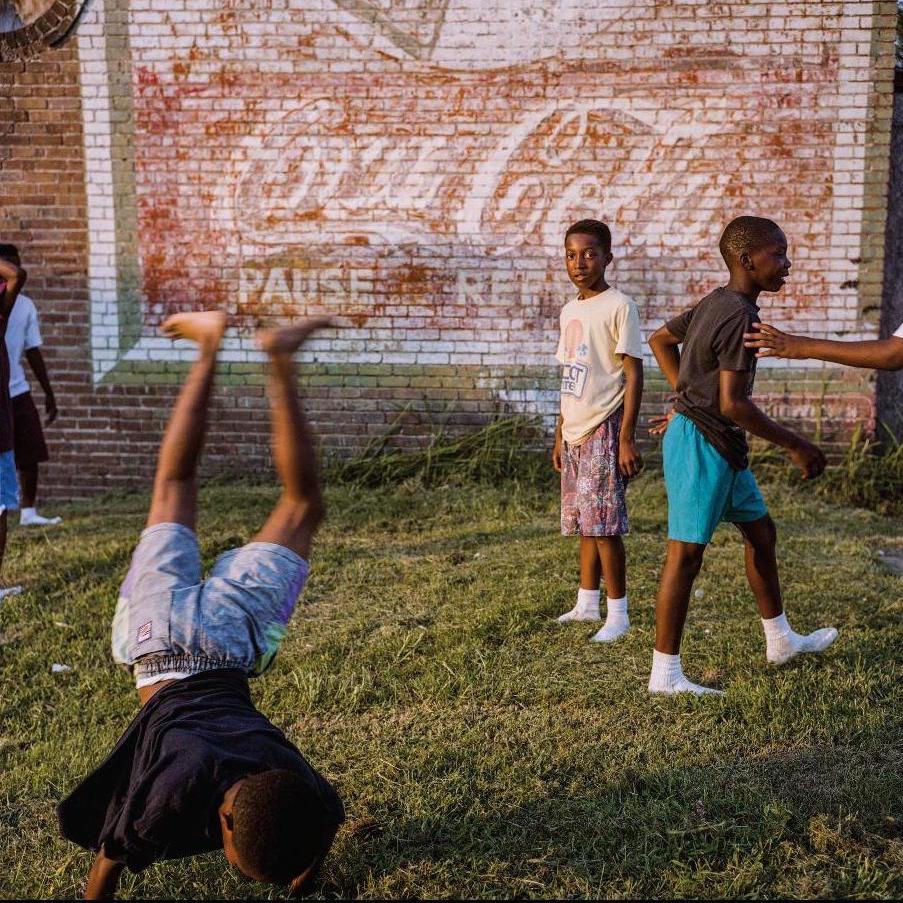
After 10 years of reporting on race, culture, and civil rights, Brentin Mock embraced environmental issues as his new beat. That was in 2008. He has since become a leading voice highlighting environmental racism in America. He speaks with Citizens Climate Radio host, Peterson Toscano about pollution, segregation, asthma, and mobility. Brentin also speaks candidly about failures of predominately white environmental organizations that attempt to reach out to people of color. He shares why these attempts fail and what climate advocates can do to build a more diverse coalition. Also joining the discussion is Dr. Natasha DeJarnett, environmental health policy analyst from the American Public Health Association. She outlines statistics on historical and contemporary pollution and how air and water pollution pose severe heath risks for everyone, but espeically people of color in the USA. 
Art House
Joining us in the Art House today is poet Tyree Daye. As an African-American man living in the the US South, Tyree weaves together stories and voices from his family. He artistically expresses the collective trauma they have experienced and the deep insights passed down. Rivers, water, and flooding continually come up in his book of poetry called River Hymns. Tyree talks about his poetry and reads pieces from the book and new poetry.
Puzzler
You are on a break with a co-worker, let's call him Murphy. You tell Murphy about a climate change conference you attended hoping to engage him in conversation. Murphy blurts out, "Seriously. I never pegged you as one of those save the whales and the polar bears kinda person. The way I see it, humans are the most adaptable beings on earth. Whatever is coming our way, we will be able to handle it. Sucks for other creatures, but humans will be just fine."
Murphy has put just you in a certain environmental box. It may or may not be a fit for you. But how can you respond to Murphy to help crack open the conversation?
Send Peterson your answers. Leave your name, contact info, and where you are from.
Get back to him by July, 15, 2018. You can email your answers to radio @ citizensclimate.org or better yet leave a voicemail of 3 minutes or less at 570.483.8194. (+1 if calling from outside the USA.)
Dig Deeper
- African-Americans faced 54% higher health burden from air pollution (particulate matter) compared to the overall population. Communities of color overall had a 28% higher health burden compared to the overall population (Mikati et al., 2018).
- Communities of color have higher exposure rates to air pollution than their white, non-Hispanic counterparts. A study monitoring 12 air pollutants showed that whites had the lowest exposures, non-Hispanic blacks had higher exposures than whites to 13 of the 14 pollutants. Hispanics generally had the highest exposures (Bell & Ebisu, 2012). Some of the pollutants studied including particulate matter, nitrate, chlorine, nickel are connected to repertory illnesses, asthma, and cardiovascular issues.
- From a 2010 CDC report, seven million American children have asthma, about one out of ten. One out of every six black child has asthma (CDC, 2010). The reported rate rose 50% between 2001 and 2010.
- In 2000 and 2010, disparities in nitrogen dioxide concentrations were larger by race-ethnicity than by income. Black and Hispanic people experienced 37% higher exposures to NO2 than white people in 2010 (Clark et al., 2017). NO2 is linked to asthma symptoms, increased susceptibility to repertory problems and heart disease (EPA).
- Most communities located next to, and directly affected by the operations of, corporate, industrial, or service facilities are low-income, communities of color, and other systemically oppressed groups. This placement exposes these groups of people to health, economic, and social hazards. Over 1 million African-Americans live in counties facing cancer risks above the EPA’s level of concern from toxins emitted by natural gas facilities. (Franklin, 2018)
- The percentage of black people in fenceline zones is 75% greater than for the U.S. as a whole, while the percentage of Latino people is 60% greater than for the U.S. as a whole (Orum et al., 2014). Larger, more chemical-intensive facilities tend to be located in counties with larger black populations and counties with high levels of income inequality.
- People of color are more likely to be exposed to environmental threats than are whites of the same social class. Race is a powerful predictor of many environmental hazards including the distribution of air pollution, location of municipal solid waste facilities, location of abandoned toxic waste sites, toxic fish consumption, and lead poisoning in children (Bullard, 1993).
- People of color make up nearly half the population in fenceline zones (11.4 million), and are almost twice as likely as whites to live near dangerous chemical facilities. Children of color make up almost two-thirds of the 5.7 million children who live within one mile of a high-risk chemical facility in the United States. Facilities in communities of color have almost twice the rate of incidents compared to those in predominately white neighborhoods – one incident per six facilities compared to one incident per 11 facilities (Starbuck & White, 2016).
(Special thanks to Dr. Natasha DeJarnett and Siena Fouse from the APHA for Dig Deeper content)
You can hear Citizens’ Climate Radio on iTunes, Stitcher Radio, SoundCloud, Podbean, Northern Spirit Radio, Google Play, PlayerFM, and TuneIn Radio. Also, feel free to connect with other listeners, suggest program ideas, and respond to programs in the Citizens’ Climate Radio Facebook group or on Twitter at @CitizensCRadio.
If you listen on iTunes, please consider rating and reviewing us!
All music is royalty free and purchased thorough PremiumBeat.com and AudioBlocks
Friday Jun 22, 2018
Friday Jun 22, 2018
Join us for this month’s extended Q&A with Nathaniel Stinnett, the Founder and Executive Director of the Environmental Voter Project.
Nathaniel was CCL’s June National Speaker and answers questions CCL volunteers submitted about environmental voters as well as sharing additional details about the presentation material covered in this month’s call, the Environmental Voter Project’s next priorities, and how CCL volunteers can help engage in helping build voting habits for environmental voters.
Friday Jun 22, 2018
Friday Jun 22, 2018
Audio Only: Join us for this month’s extended Q&A with Nathaniel Stinnett, the Founder and Executive Director of the Environmental Voter Project.
Nathaniel was CCL’s June National Speaker and answers questions CCL volunteers submitted about environmental voters as well as sharing additional details about the presentation material covered in this month’s call, the Environmental Voter Project’s next priorities, and how CCL volunteers can help engage in helping build voting habits for environmental voters.
Thursday Jun 21, 2018
Thursday Jun 21, 2018
No story is harder to tell than the one about our changing climate and what it means for each of us. Reciting the facts is not enough to move people to action. How do we break through the collective silence in creative and effective ways? How can we help people become curious about climate change? Discover how to deepen a conversation and a relationship through better storytelling.
Peterson Toscano
Speaker
Citizens' Climate Radio
Host
Elizabeth Dell
Speaker
Citizens' Climate Lobby/Citizens' Climate Education
Great Lakes Regional Co-Coordinator
Tasha Reddy PhD
Speaker
Citizens' Climate Lobby/Citizens' Climate Education
California State Coordinator
Thursday Jun 21, 2018
Thursday Jun 21, 2018
Will 2018 be the year when the United States enacts it's first carbon fee and dividend policy at the state level? Come and hear about the efforts on the verge of success and how you can join the growing movement to pressure congress to act through enacting state-level legislation.
Jamie DeMarco
Moderator
Citizens' Climate Education/Citizens' Climate Lobby
State-Level Carbon Pricing Coordinator
Jessica Langerman
Speaker
Climate X-Change, MA
Founder
Michael Green
Speaker
CABA/ClimateXChange
Executive Director
Camila Thorndike
Speaker
Chesapeake Climate Action Network
Carbon Pricing Coordinator
Thursday Jun 21, 2018
Thursday Jun 21, 2018
Rep. Ted Deutch, co-founder of the Bipartisan Climate Solutions Caucus, shares a speech at CCL's Tuesday Conference Reception thanking and encouraging volunteers to keep up their essential work.
Thursday Jun 21, 2018
Thursday Jun 21, 2018
As Chairman and CEO of the Climate Leadership Council, Ted Halstead has mobilized a surprising group of high-profile supporters behind a carbon dividends plan, including top companies, environmental NGOs, and opinion leaders from across the political spectrum. Joining Ted are two students who are expanding the movement onto college campuses: Students for Carbon Dividends (S4CD) Founder and President Alex Posner, and Harvard College Republican Club President and S4CD Vice President Kiera O’Brien. Learn how they are harnessing the energy of students to pave the way for a bipartisan climate breakthrough.
Thursday Jun 21, 2018
Thursday Jun 21, 2018
Listen to inspiring stories from first time CCL volunteers as they reflect on their experiences and how the CCL conference and lobby day impacted their view on how one relates to one's government and democracy.