599.9K
Downloads
952
Episodes
Official podcast for climate heroes from Citizens' Climate Lobby. We're creating the political will for a livable world.
Episodes
Saturday Sep 28, 2019
Saturday Sep 28, 2019
Join Dr. Dave Christian, Utah State University Professional and Scientific Psychology Professor for a training that will show you how to use Motivational Interviewing to more effectively connect with your members of Congress, local leaders, or even members of your own CCL group.
“Motivational Interviewing” is a communication style that fosters collaboration and offers you as an advocate a package of skills to collaborate with anyone, especially “difficult people.” As a well-regarded professional approach Motivational Interviewing has thirty years of research across many fields and more than 1,000 studies demonstrating its effectiveness.
Skip ahead to the following section(s):
What Is Motivational Interviewing? (2:03)
The Spirit of Motivational Interviewing (PACE) (8:58)
Core Skills: OARS (23:04)
Live Role-Play Demonstration (31:17)
Next Steps (43:25)
Presentation slides: http://cclusa.org/motivational-interviewing
Training Page on Community: https://community.citizensclimate.org/resources/item/19/123
Follow us on Facebook: http://facebook.com/citizensclimatelobby
Twitter: http://twitter.com/citizensclimate/
Saturday Sep 28, 2019
Saturday Sep 28, 2019
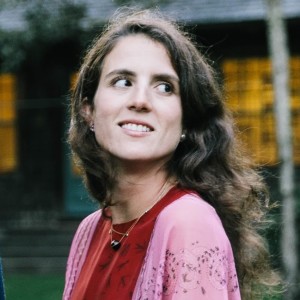
Tatiana Schlossberg is the author of the new book, Inconspicuous Consumption. In it she highlights just how good we are at being bad when it comes to fossil fuel pollution. She exposes the pollution generated by four major industries--Fuel, Food, Internet, and Fashion. About the book, Bill McKibben writes, “[Schlossberg] deserves real credit for coming through her journey into the guts of the consumer machine with a clarifying insight: We aren’t going to solve our problems one consumer at a time. We’re going to need to do it as societies and civilizations, or not at all.”
In her conversation with host, Peterson Toscano, Schlossberg dives into the the vast world of fashion and the extreme pollution the industry produces, and how this pollution contributes to global warming. She focuses on specific sectors including denim and the production of jeans.
In writing about cotton, Schlossberg points out, “It’s grown in more than sixty-five countries around the world, makes up about one-third of all the fibers used in textiles, takes up about 3 percent of global agricultural land, and has a big carbon footprint: producing the world’s cotton supply for the use in textiles results in 107.5 million tons of carbon dioxide emissions every year.”
In addition to creating pollution, growing cotton and manufacturing cotton textiles demand a massive amount of water. “Producing one kilogram of cotton requires somewhere between 1,800 and 7,660 gallons of water, depending on where its grown,” according to Schlossberg. Once harvested, the cotton is then transformed into fabrics like denim, a process that is also water intensive. Schlossberg states, “as much as 2,900 gallons can be used to produce a single pair of pants (using conventional methods), mostly because of the dyeing and finishing.”
When it comes to the alternatives to cotton, like synthetics, Schlossberg reveals the tremendous greenhouse gas emissions and micro-fiber pollution created every year as a result of the manufacture, use, washing, and disposing of synthetic fabrics. The company that pioneered synthetic fabric, Patagonia, is now hard at work looking for solutions and alternatives. Schlossberg warns pollution from fashion is increasing because of the growing industry of fast fashion, where cheap quick production comes with a hidden ecological price tag.
In her book and this podcast episode, Schlossberg does a great job of pointing out the many sources of pollution that come from the world of fashion. She readily admits she does not provide many solutions. Her job is to help us understand the scale of the problem. She recognizes the response needs to be in relation to the size of the problem. Individual efforts are not nearly enough. The role of politicians and the political process is vital to bringing about the changes in policy we need. In addition, the role of citizens speaking out about climate change is more important than ever.
Schlossberg helps us consume this heavy topic with plenty of spoonfuls of sugar; her humor, warmth, and hope shine through.
The Art House
What does it take to create a poetic masterpiece that is also able to express the complex emotions we feel around climate change? Poet Catherine Pierce describes her process crafting her moving poem, Anthropocene Pastoral Host, Peterson Toscano produces an Art House segment heavily influenced by the podcast Song Exploder. They invite a musician to unpack a song and talk about almost every aspect of it and their creative process. In the Art House, Pierce does something similar for us with Anthropocene Pastoral. The poem first appeared in the American Poetry Review.
Inspired by the California Super Bloom of 2017, Pierce captures the strangeness of living in a world that is rapidly and dangerously changing but at the same time can be unseasonably pleasant and beautiful. (Tatiana Schlossberg wrote about a Super Bloom for the New York Times.)
Pierce opens the poem with the line, "In the beginning the ending was beautiful.”
In the conversation she reveals the many choices she made as a poet to create the haunting mood of the poem and the lush landscape in it filled with a riot of images, animals, and life. She explains some of the techniques and devices she uses to construct the poem. Then she reads the poem for us.
You can read more of Catherine Pierce's climate change themed poetry online including High Dangerous and Planet. Pierce’s last book of poetry, The Tornado is the World is about an EF-4 tornado/extreme weather. The filmmaker Isaac Ravishankara produced a beautiful short film out of one of the poems in the collection, "The Mother Warns the Tornado.”
Catherine Pierce is the co-director of the Writing Program at Mississippi State University, and the author of the award winning collection of poetry, Famous Last Words. She is working on a new book of poetry, Danger Days, which continues her exploration of climate change. It will be available in autumn 2020.
Puzzler
Students from Susquehanna University answer last month's puzzler question. Victor, a middle school student is freaking out because of climate change. “What could I even do about?” What does he need to hear?
We also get inspiration from elementary students at the River Valley Nature School who gave a presentation at the Climate Strike event held in Lewisburg, PA.
New Puzzler Question:
After attending the recent climate strikes you ran into your cousin, Kristan. She saw news reports about events around the world. She says, “I love the sign—system change not climate change, but it seems like a total fantasy. They expect everyone to go vegan or something? What systems can we change that will make any difference with climate change? ”
Kristan needs some help envisioning the kind of change that you are pursuing. How would you answer Kristan?
Leave your name, contact info, and where you are from. Get your answer in by October, 15, 2019. You can email your answers to radio @ citizensclimate.org or leave a voicemail of 3 minutes or less at 518.595.9414. (+1 if calling from outside the USA.)
Dig Deeper
- The Price of Fast Fashion (Nature)
- Making Climate Change Fashionable—The Garment Industry Takes on Global Warming (Forbes)
- We Have No Idea How Bad Fashion Actually Is for the Environment—But it’s definitely not good. (Racked)
- Synthetic Microfiber Pollution (Patagonia)
- Waste Not, If You want to Help Secure the Future of the Planet. (NY Times article by Tatiana Schlossberg)
You can hear Citizens’ Climate Radio on iTunes, Spotify, Stitcher Radio, SoundCloud, Podbean, Northern Spirit Radio, Google Play, PlayerFM, and TuneIn Radio. Also, feel free to connect with other listeners, suggest program ideas, and respond to programs in the Citizens’ Climate Radio Facebook group or on Twitter at @CitizensCRadio.
Friday Sep 20, 2019
Friday Sep 20, 2019
Lobbying can be both exciting and intimidating. Being prepared is one way to reduce anxiety.
Join CCL Director of Field Development Elli Sparks for a training that will walk you through CCL's step-by-step process for preparing for your meetings in Washington, D.C. with Congress and/or their staff, including research tips, available CCL tools, lobby meeting roles, the value of practice, and the power of listening.
Skip ahead to the following section(s):
Resources For Preparing To Lobby (5:59)
Roles in Your Meeting (19:16)
Supporting Asks (24:06)
The Importance of Practice (38:43)
Sample Practice Meeting (43:21)
Presentation slides: http://cclusa.org/planning-your-meeting
Training Page on Community: https://community.citizensclimate.org/resources/item/19/185
Follow us on Facebook: http://facebook.com/citizensclimatelobby
Twitter: http://twitter.com/citizensclimate/
Saturday Sep 14, 2019
Saturday Sep 14, 2019
How did American politics get to be so dysfunctional? It has a lot to do with psychology, and our guest this month, Jonathan Haidt, will help us wrap our heads around this phenomenon. A Professor of Ethical Leadership at New York University Stern School of Business, he is the author of The Righteous Mind: Why Good People are Divided by Politics and Religion. Haidt’s book explains the origins of the human moral sense and how variations in moral intuitions can help explain the polarization and dysfunction of American politics.
Helpful Links:
Monthly Action Sheet: http://cclusa.org/actionsheet
https://www.openmindplatform.org
https://righteousmind.com/about-the-book/discussions-of-the-book/
CCL Youth Outreach: youth@citizensclimate.org
Find out more at https://www.citizensclimatelobby.org
Friday Sep 13, 2019
Friday Sep 13, 2019
Join CCL Communications Coordinator Flannery Winchester for a training that walks through the various media resources CCL's staff offers. We'll cover Letter to the Editor opportunities, op-eds, editorial packets, and press releases: not just what they are, but where you can find them on CCL Community and how you can use each of them in your local media market. Flannery will also highlight the important role of Media Manager for CCL chapters and how you can sign up to find out more.
Skip ahead to the following section(s):
LTE Opportunities (5:09)
Op-Ed Opportunities (8:50)
Editorial Media Packets (11:54)
Press Releases (16:28)
Media Manager Role (20:33)
Tonight’s slides: http://cclusa.org/media-resources
CCL Resource: https://community.citizensclimate.org/resources/item/19/372
Follow us on Facebook: http://facebook.com/citizensclimatelobby
Twitter: http://twitter.com/citizensclimate/
Saturday Sep 07, 2019
Saturday Sep 07, 2019
Join Dr. Kristina Dahl, co-author of the Union of Concerned Scientist's recent report "Killer Heat in the United States: Climate Choices and the Future of Dangerously Hot Days."
Dr. Dahl will review the main findings of the report, the importance of communicating local impacts from climate change, as well as how to use the Union of Concerned Scientists' new tool where you can see an estimated number of extreme heat days for cities and counties in the US in your own local outreach and meetings. We'll also review where you can find the rest of CCL's Local Impacts Resources on CCL Community.
Extreme Heat Report & Tool: https://ucsusa.org/killer-heat
Background on the Analysis (3:14)
About the Heat Index & Scenarios (6:39)
Mid- and Late-Century Projections (7:50)
Takeaways & Tool (12:43)
Questions (15:26)
Finding Local Impacts Resources on CCL Community (18:30)
Tonight’s slides: http://cclusa.org/extreme-heat
CCL Resource: https://community.citizensclimate.org/resources/item/19/424
Follow us on Facebook: http://facebook.com/citizensclimatelobby
Twitter: http://twitter.com/citizensclimate/
Friday Aug 30, 2019
Friday Aug 30, 2019
Join George Marshall, Climate Outreach's Co-Founder & Director of Training and Consultancy (and former CCL Monthly Speaker) along with Tom Erb, Partner Relations Coordinator, Carbon Pricing Leadership Coalition at The World Bank in a training that will help CCL volunteers improve our communications around carbon pricing policy based on the main findings and recommendations in the Guide to Communicating Carbon Pricing report (Partnership for Market Readiness & Carbon Pricing Leadership Coalition, 2018).
Skip ahead to the following section(s):
Background & Key Findings (2:53)
Improving The Standard Narrative (16:41)
Challenges To Communicating (27:47)
Energy Innovation Act Applications (33:58)
Ground Rules for Effective Conversations (42:13)
Presentation Slides: http://cclusa.org/communicating-carbon-pricing
CCL Community Training Page: https://community.citizensclimate.org/resources/item/19/423
Follow us on Facebook: http://facebook.com/citizensclimatelobby
Twitter: http://twitter.com/citizensclimate/
Saturday Aug 24, 2019
Saturday Aug 24, 2019
In this training, learn from CCL leaders Miranda Phillips and Jean Ritok about suggestions for engaging new volunteers coming back for more, including how to welcome your new volunteers and successfully onboard them into your group, how to delegate and keep people constantly involved.
Skip ahead to the following section(s):
Welcoming New Volunteers (3:09)
Three Phases on Onboarding (8:44)
The Power of Asking For Help (31:59)
Smaller Chapter Considerations (35:27)
Setting Up Your Group On Community (37:42)
Presentation Slides: http://cclusa.org/new-volunteers-engaged
CCL Training Page: https://community.citizensclimate.org/resources/item/19/298
Follow us on Facebook: http://facebook.com/citizensclimatelobby
Twitter: http://twitter.com/citizensclimate/
Saturday Aug 24, 2019
Saturday Aug 24, 2019
Join CCL Regional Coordinator Tamara Staton for a training that will highlight how local groups can incorporate more fun, volunteer support, culture and community building into their group meetings and local activities with examples of what's worked for CCL chapters around the country.
Skip ahead to the following section(s):
The Importance Of Group Culture (1:40)
How CCL National Creates Culture (5:31)
Building Culture & Joy In Your Meetings (12:33)
Gratitude Practices (23:45)
Additional Chapter Activities (26:12)
Presentation Slides: http://cclusa.org/fun-culture-building
CCL Community Page: https://community.citizensclimate.org/resources/item/19/422
Follow us on Facebook: http://facebook.com/citizensclimatelobby
Twitter: http://twitter.com/citizensclimate/

Saturday Aug 24, 2019
Saturday Aug 24, 2019
Sometimes we cannot easily imagine the impacts legislation and policy can make. Andrews Smalls from City Lab wrote the article, What American Cities Looked like Before the Environmental Protection Agency Was Created. "Since 1970, the agency has reduced the six most common air pollutants by more than 50 percent, reduced air toxins from large industrial sources by almost 70 percent, and eliminated the use of ozone-depleting chemicals. And this progress was accomplished even as the country’s GDP tripled, energy consumption increased by 50 percent, and vehicle use nearly doubled."
Of course we have still have work to do. We need to reduce localized pollution and heat-trapping greenhouse gases globally. So how do we build the political will so that the public clamors for legislation and policy that will change how we get and use energy? We need to communicate to the public what success looks like. Envisioning success in our climate work though requires imagination.
To help us with this task Sean Dague, the group leader for the Mid-Hudson South chapter of Citizens Climate Lobby, leads us through a powerful exercise. He asks us, What does a decarbonized world look like? What does it smell like? What does it sound like?
Once you hear Sean’s vision of a successful future, we invite you to continue the exercise. Try some creative writing. Write a short story or a letter from the future about what you see, smell, and hear. Maybe create visual art, a drawing or painting. If you can’t draw or paint, get images from magazines and on-line then create a collage. Write a song, create a map, choreograph a dance. Use art to capture a vision of a decarbonized world. Even if you do not see yourself as an artsy person, just try it.
Towards the end of his life, writer Kurt Vonnegut would say, "Everyone should practice art because art enlarges the soul."
PLEASE feel free to share your art with our host, Peterson Toscano, and let him know if I can share it with listeners, on the podcast, Facebook, and Twitter.
If you have art from this exercise to share or if you have idea for the Art House, feel free to contact Peterson at radio@citizensclimate.org.
You just spoke to a group of middle school students about your climate change work. During the Q&A a student named Victor says, “I am freaking out because of all the bad stuff I am seeing and it seems like it is just getting worse and worse. I really do not see the point of even trying anymore. I think we are too far gone. What difference does this make?”
Lots of people young and old feel the same way. So how do you respond to Victor? How can you validate his fears while also giving him reasons to hope and pursue solutions.
Send us your answers. Leave your name, contact info, and where you are from.
Get back to Peterson by September, 15, 2019 Email: radio @ citizensclimate.org or leave a voicemail of 3 minutes or less: 518.595.9414. (+1 if calling from outside the USA.)
- Climate Interpreter, Do you work or volunteer with an aquarium, zoo, national park, national marine sanctuary, or other informal science education center that is addressing climate change? Connect and share with a national community of colleagues and peers.
- NNOCCI’s Research Reports, Frameworks Institute
- What Does Success Look Like? Reports from the Future from Climate Stew
- Role of Values in climate change community engagement, NewsDay
- America Adapts podcast episode 95 Summer Sizzle featuring Citizens Climate Radio
- Citizens Climate Radio Ep 12: Values that drive CCL’s work