599.9K
Downloads
952
Episodes
Official podcast for climate heroes from Citizens' Climate Lobby. We're creating the political will for a livable world.
Episodes

Saturday Nov 23, 2019
Saturday Nov 23, 2019
Adam Rosenbalm and Austin Ramsey study at East Tennessee State University (ETSU.) Both raised in Conservative families in the South, they arrived on campus at a time when American citizens were more politically polarized than ever. After the 2016 election it seemed the country was more polarized than ever. Conversations quickly became debates that led to arguments. Both Adam and Austin wanted to do something about the partisan divide between Conservative and Liberal Americans. Fortunately they learned about a new group called Better Angels.
According to the Better Angels’ website, "Better Angels is a national citizens’ movement to reduce political polarization in the United States by bringing liberals and conservatives together to understand each other beyond stereotypes, forming red/blue community alliances, teaching practical skills for communicating across political differences, and making a strong public argument for depolarization.” They do this through their Red and Blue Workshops. With the help of a skilled facilitator, Better Angels hosts parliamentary styles debates.
After attending a Better Angels’ event, Adam and Austin decided to bring the Better Angels’ style of debate to the ETSU campus. They hosted the first-ever Better Angel’s debate on a college campus. They chose a hot button topic that drew a large audience. Adam explains, “East Tennessee State University is in rural Tennessee…and firearms are a part of most people’s lives, and so we set forth the resolution that said, ‘Resolved: Students should be allowed to carry guns on campus.’ The whole premise of the event after that was people were asked to either speak in the affirmative or the negative on the topic.” Throughout the debate students were given space to share their feelings about the topic and raise questions.
What often becomes a heated debate where people walk away angry and further divided instead became a space of deeper understanding and friendship. Because of skillful facilitation and clear guardrails that kept the conversation moving forward, the ETSU Better Angels gun debate was a huge success. Austin says, “It really won over the campus. Students really connected with the style. We had students on both side of the issues that at the end worked together to say, hey, we need to meet to talk about this issue. We need to work together, because now we see this issue is deeper than a gun…it’s about how we’ve been raised, how we perceive this issue, where we were born, and how some of the milestones in our lives affect how we think about this. And that’s important when we talk about these difficult issues.”
After that initial success, Adam and Austin organized debates on other topics. They share with Citizens Climate Radio host, Peterson Toscano, some of the insights they have learned that help them to foster civil discourse that results in genuine understanding and appreciation of people on the other side of an issue. They also talk about climate change and the challenges that must be overcome when organizing an effective dialogue between Conservatives and Liberals.
The Art House
Being a climate advocate can be very difficult. How do you maintain hope in the face of bad news and apathy from those around you? Where do you find encouragement and inspiration? What role can faith play in our climate work? These are the questions Rev. Dr. Leah D. Schade and Rev. Dr. Margaret Bullitt-Jonas the editors of a new anthology of essays by climate change faith leaders, wanted to answer. They bring together 21 climate leaders in the book, Rooted & Rising: Voices of Courage in a Time of Climate Crisis.
Contributors include Dr. Katharine Hayhoe, Rev Fred Small, Cristina Leaño, and Rabbi Shoshana Meira Friedman. In his introduction to the book, Bill McKibben argues for the need for a faith-based book about climate action, “…love, I would suggest, is what finally roots this volume: a love for the world around us, in all its improbable glory, and for the people who alone can bear witness to that glory and rise to its defense. If they are indeed summoned to that calling, it may be in part by fear—by the proper functioning of the survival instinct. But I suspect it will be more by love, the ever-great mystery. This volume opens some windows on that mystery, because the people whose words are collected in it have been powered by that force.”
In the Art House the editors speak briefly about the book, and then contributors, Dr. Nathasha DeJarnett, a research coordinator at the National Environmental Health Assocation reads a portion of her essay, “The View from My Window. Corina Newsome, from Young Evangelicals for Climate Action shares how her hope was rekindled through the process of writing her piece, “The Thing with Feathers.” Once she received her copy of the book and read the other essays, she found even more hope.
Puzzler
We hear answers to last month’s puzzler: System Change, Not Climate Change. What does that even mean?
New Puzzler Question
You are talking to your neighbor, Darren. You explain the many possible ways of we can address climate change. One proposal is to charge energy companies a fee when they extract fossil fuels. The money collected then goes to households. You say this carbon fee and dividend plan will serve as an incentive to switch over to cleaner sources of energy. Darren replies, “Well that’s stupid. People will just use the dividend they get to continue paying for fossil fuels. Giving them money enables them to stay in their fossil fuel lifestyles?”
What do you have to say to Darren?
Send Peterson your answer by December 15, 2019, along with your name, contact info, and where you are from. You can email your answers to radio @ citizensclimate.org or leave a voicemail of 3 minutes or less at 518.595.9414. (+1 if calling from outside the USA.)
Dig Deeper
- Conservative Climate Lobby Day
- What Does the Bible Say about Climate Change? Ep 30 Citizens Climate Radio
- Parliamentary Procedure, Britannica
- The Case for Climate Hope by Conor Dwyer Reynolds, The New Republic
You can hear Citizens’ Climate Radio on iTunes, Spotify, Stitcher Radio, SoundCloud, Podbean, Northern Spirit Radio, Google Play, PlayerFM, and TuneIn Radio. Also, feel free to connect with other listeners, suggest program ideas, and respond to programs in the Citizens’ Climate Radio Facebook group or on Twitter at @CitizensCRadio.
If you listen on iTunes, please consider rating and reviewing us!
Friday Nov 15, 2019
Friday Nov 15, 2019
Join Dr. Noah Kaufman, Research Scholar at Columbia University, and Jerry Hinkle, CCL Research Coordinator, for a live webinar discussing the recently released Columbia University's "Assessment of the Energy Innovation Act." This study offers an up-to-date, independent assessment from a prestigious institution of the Energy Innovation Act’s impacts on emissions, air pollution, and Americans’ finances. It confirms that the Energy Innovation and Carbon Dividend Act is effective at reducing emissions and is good for people.
Skip ahead to the following section(s):
Emissions Impacts (8:13)
Energy Production & Prices Impacts (15:04)
Government Revenues (20:01)
Impacts Beyond The Assessment's Scope (24:29)
Comparison To Other Proposals (27:39)
Columbia Website: energypolicy.columbia.edu/research/report/assessment-energy-innovation-and-carbon-dividend-act
CCL Training Page: https://community.citizensclimate.org/resources/item/19/184
Follow Citizens' Climate Lobby on Facebook: https://www.facebook.com/CitizensClimateLobby
Twitter: https://twitter.com/citizensclimate
Saturday Nov 09, 2019
Saturday Nov 09, 2019
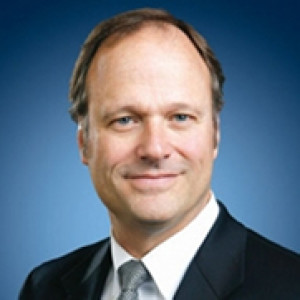
Solving climate change — and saving civilization as we know it — will require a major systemic shift in our culture. Andrew Hoffman maintains that we are in a societal moment akin to a new era of enlightenment. He joins us to talk about the system-level changes to our thinking needed in the anthropocene and the role of business in the great rethinking of our economy. Hoffman is the Holcim (US) Professor of Sustainable Enterprise at the University of Michigan. He has published 16 books, including:
Helpful Links:
CCL November Action Sheet: https://cclusa.org/actionsheet
The Next Phase of Business Sustainability
Friday Nov 08, 2019
Friday Nov 08, 2019
Are you curious about what to expect about the November Lobby Day or have a question about any final details? Join CCL Project Specialist Morgan McCue and CCL National Outreach & Partnerships Coordinator Taylor Krause for a final walk-through of the who, what, and where for the November Lobby Day to help you prepare for what to expect with the schedule, logistics, and details.
Skip ahead to the following section(s):
Pre-conference Preparations (2:21)
Your Meetings (5:08)
November Lobby Day Schedule (16:45)
Getting To The Hill (27:41)
Submitting Meeting Minutes (32:42)
Presentation slides: http://cclusa.org/logistics
Training Page: https://community.citizensclimate.org/resources/item/19/272
Follow us on Facebook: http://facebook.com/citizensclimatelobby
Follow us on Twitter: http://twitter.com/citizensclimate/
Saturday Oct 26, 2019
Saturday Oct 26, 2019
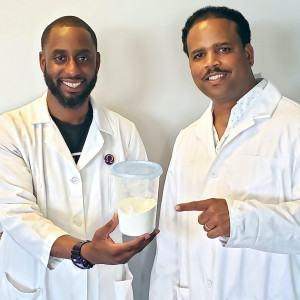
Tuskegee University is a historically Black University in Alabama founded in 1881. From the early work of George Washington Carver, Tuskegee has trained generations of researchers who are unraveling mysteries from the natural world. Dr. Carver wrote, “I love to think of nature as an unlimited broadcasting station, through which God speaks to us every hour, if we will only tune in.”
Two researchers have been tuning in and made a series of extraordinary discoveries all from agricultural waste. Out of the muck Dr. Michael L Curry, Dr. Donald White, and a team of other researchers found a natural alternative to plastics, one that will biodegrade in less than 100 days. This will keep us from adding even more pollution to a very polluted world. Further researched revealed this material also has other extraordinary properties.
Dr. Curry and Dr. White continue in the tradition of George Washington Carver and the many curious, well trained, and highly skilled researchers at Tuskegee University.
The Art House
Puzzler Question
We will extend the puzzler question from last month.
After attending the recent climate strikes, imagine you run into your cousin, Kristan. She saw news reports about events around the world. She says, “I love the sign ‘system change not climate change,’ but it seems like a total fantasy. They expect everyone to go vegan or something? What systems can we change that will make any difference with climate change?"
Kristan needs some help envisioning the kind of change that you are pursuing. How would you answer her?
Send Peterson your answer by November 15, 2019, along with your name, contact info, and where you are from. You can email your answers to radio @ citizensclimate.org or leave a voicemail of 3 minutes or less at 518.595.9414. (+1 if calling from outside the USA.)
Dig Deeper
- George Washington Carver, Tuskegee University
- 7 Incredible Uses for Nanocellulose, Gizmodo
- Bioplastics, Encyclopedia Britannica
- MIT engineers devise new way to remove carbon dioxide from the air, Cnet.com
- Acting for Climate Facebook page
- Artists for Climate Change
You can hear Citizens’ Climate Radio on iTunes, Spotify, Stitcher Radio, SoundCloud, Podbean, Northern Spirit Radio, Google Play, PlayerFM, and TuneIn Radio. Also, feel free to connect with other listeners, suggest program ideas, and respond to programs in the Citizens’ Climate Radio Facebook group or on Twitter at @CitizensCRadio.
If you listen on iTunes, please consider rating and reviewing us!
Friday Oct 25, 2019
Friday Oct 25, 2019
Join Adeline DeYoung, CCL Legislative Assistant, as she walks through this year's June Meeting Analysis results as well as how you can use it in a meeting with a Member of Congress, the media, potential endorsers, and the larger community.
This annual analysis covers CCL's 528 meetings with members of Congress and their staff in June each summer. Additionally, the CCL June Meeting Analysis reports paved the way for the creation of the Frequently Raised Topics resource we use to prepare for meetings with members of Congress or their staff.
Skip ahead to the following section(s):
How was this done? (3:30)
What were the most frequent topics? (9:23)
Change of annual trends (13:38)
Other Frequently Raised Topics (and where to find them) (15:57)
Assessing Engagement (21:11)
Presentation Slides: http://cclusa.org/2019-june-analysis
Training on CCL Community: https://community.citizensclimate.org/resources/item/19/271
Frequently Raised Topics Resource: https://community.citizensclimate.org/resources/item/19/248
Follow us on Facebook: http://facebook.com/citizensclimatelobby
Follow us on Twitter: http://twitter.com/citizensclimate/
Friday Oct 18, 2019
Friday Oct 18, 2019
Join Marc Hafstead, Fellow and Director of the Carbon Pricing Initiative at Resource For the Future, and CCL Research Coordinator Jerry Hinkle for a training that reviews the main findings from the recent carbon pricing economic and energy model used by Resources for the Future and their own calculator used to evaluate current carbon pricing bills in Congress including the Energy Innovation and Carbon Dividend Act.
Skip ahead to the following section(s):
RFF and Calculator Background (2:30)
Using the Calculator (10:51)
Greenhouse Emission Reductions Comparisons (15:40)
Comparing Distribution of Impacts (21:15)
GDP Considerations (25:20)
RFF Carbon Pricing Calculator: https://www.rff.org/cpc
Training Page on Community: https://community.citizensclimate.org/resources/item/19/430
Follow us on Facebook: http://facebook.com/citizensclimatelobby
Twitter: http://twitter.com/citizensclimate/
Saturday Oct 12, 2019
Saturday Oct 12, 2019
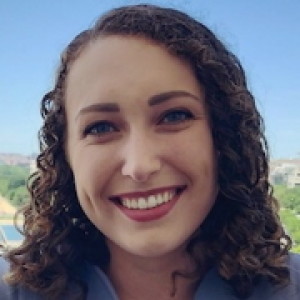
There’s been a shift among Republicans in Congress on climate change, due in no small part to polling that shows younger GOP voters are as concerned about climate change as their progressive counterparts. As vice president of Students for Carbon Dividends, Keira O’Brien is working to harness that passion among young conservatives to generate political will for carbon dividends legislation, which places a fee on carbon and gives revenue to households (sound familiar?). Kiera, who is President Emeritus of the Harvard Republican Club, recently testified at a congressional hearing alongside Republican pollster Frank Luntz. Over the summer, she spoke about carbon dividends at the Teen Vogue Summit: “There are many climate-oriented groups rallying around the problem, but Students for Carbon Dividends is rallying around the solution.”
Helpful Links:
IMF's Support For a $75/ton Carbon Tax: https://blogs.imf.org/2019/10/10/fiscal-policies-to-curb-climate-change/
Students For Carbon Dividends: https://www.s4cd.org/
Economists' Statement: https://www.clcouncil.org/economists-statement/
CCL Monthly Action Sheet: http://cclusa.org/actionsheet
Friday Oct 11, 2019
Friday Oct 11, 2019
Interested in learning more about what it takes and key details to remember when leading a virtual lobby meeting with a member of Congress or staff?
Join CCL Northeast Regional Coordinator Iona Lutey for a training that will review the role of a lobby team leader, how they assign team roles, coordinate practice times and how to handle other special situations.
Skip ahead to the following section(s):
The Importance of Leads (4:21)
Advance Planning (8:35)
Pre-Lobby Meeting Suggestions (19:28)
Expressing Leadership (27:48)
Meeting Debrief & Filing Minutes (39:35)
Additional Resources:
Presentation slides: http://cclusa.org/lobbylead
Training on CCL Community: https://community.citizensclimate.org/topics/working-with-congress/lobbying-401
Saturday Oct 05, 2019
Saturday Oct 05, 2019
Recent updates to the Personal Carbon Dividend Calculator help make it even an easier--to-use online tool to estimate the financial outcome of the policy for an individual household under the first-year carbon dioxide fee of $15 per metric ton. It's a way to take the abstract statistical findings of the Household Impact Study down to the personal level.
Join Rick Knight, CCE's Research Coordinator and Bryan Hermsen, CCL's IT Administrator and Applications Developer as they walk through the updates for this CCL-created powerful tool for all CCL volunteers.
Calculator Link:https://energyinnovationact.org/carbon-dividend-calculator/
This tool is a handy way to answer questions from friends, family, interested parties at a tabling event or presentation, or potential supporters who need a clearer idea of how carbon fee and dividend policies work. It can be used to create case studies for households in a particular Congressional District or town and can also be used to find out how certain lifestyle change will affect your bottom line under our policy.
Skip ahead to the following section(s):
What is the Calculator? (2:20)
What's been updated? (5:39)
Where can I access it? (8:43)
Calculator Case Studies (10:42)
What about negative results & how do I use it? (19:14)
Presentation slides: http://cclusa.org/calculator-training
Training Page on Community: https://community.citizensclimate.org/resources/item/19/133
Follow us on Facebook: http://facebook.com/citizensclimatelobby
Twitter: http://twitter.com/citizensclimate/