600.2K
Downloads
953
Episodes
Official podcast for climate heroes from Citizens' Climate Lobby. We're creating the political will for a livable world.
Episodes
Friday Oct 05, 2018
Friday Oct 05, 2018
Why do we exist and who do we serve?
CCL’s brand is the deepest articulation of ourselves and helps us communicate our unique value to our volunteers, donors, congress members and partners.
Join CCL’s Marketing and Communications Team for a webinar that reviews CCL’ s brand pillars, style and messaging, why they’re important, and the guidelines on how to best use them.
For a link to the slides and full training visit: https://community.citizensclimatelobby.org/learn/communications/uncovering-ccl-brand/
Our website: https://citizensclimatelobby.org
Follow us on FB: https://www.facebook.com/CitizensClimateLobby
Twitter: http://twitter.com/citizensclimate
Youtube: www.cclusa.org/youtube
Saturday Sep 29, 2018
Saturday Sep 29, 2018
Have you wanted to help your CCL chapter engage with and learn more about the diversity of communities in your own town?
Join Karina Ramirez, CCL’s Diversity Coordinator, in a webinar geared at helping your group with strategies and tools to expand your chapter’s diversity footprint and represent a more complete array of your local community’s constituency.
The webinar highlights steps to take in building these connections and considerations to understand communication recommendations to help build relationships of trust and mutual investment.
For a link to the slides and full training visit: https://community.citizensclimatelobby.org/learn/group-leaders/reaching-out-to-diverse-communities/
Our website: https://citizensclimatelobby.org
Follow us on FB: https://www.facebook.com/CitizensClimateLobby
Twitter: http://twitter.com/citizensclimate
Youtube: www.cclusa.org/youtube
Saturday Sep 22, 2018
Saturday Sep 22, 2018
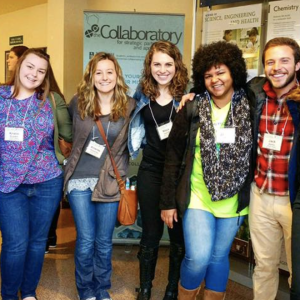
University campuses in the USA are the training grounds for collective action leading to systems changes. Since 2012 a group of students at the University of Delaware have taken on a big idea--to transform their large lush heavily chemically treated lawns into an organic public green. The Green the Greeninitiative has required thoughtful strategy, community building, public education, and lots of persistence. Climate advocates can learn a lot from their methods. Show host, Peterson Toscano, speaks with Sophie Phillips, a senior and the outgoing head of Students 4 the Environment. Sophie is in the process of handing over the work to sophomore, CJ Krulewitch who also talks about strategies and successes. They both offer advice for climate advocates.
Art House
In the USA one of the most dramatic encounters happens around the Thanksgiving holiday table. In the USA one of the most dramatic encounters happens around the Thanksgiving holiday table. In his play, Dad, theater student Dante Flores decides to magnify the tension. He talks about the setting, tone, and structure of his play. By putting the action on a repeat loop, he deepens the theater experience.
Puzzler
You are talking with your neighbor, Tabitha. She seems interested in your work as a climate advocate. You tell her about large solutions like carbon fee and dividend. You are so excited to find someone who wants to know more. But then you notice Tabitha's eyes start to glaze over. She interrupts you, "This all sounds so important and overwhelming. But What does it mean for you and for me?"
Tabitha wants to better understand climate change. She doesn't need more facts right now. She needs to hear some of your own story. How might you begin to shift the tone and and get personal with her? What does climate change mean for you? Let's personal.
Send Peterson your answers. Leave your name, contact info, and where you are from.
Get back to him by October 15, 2018. You can email your answers to radio @ citizensclimate.org or leave a voicemail of 3 minutes or less. And don't be anxious about the voicemail. You can leave as many versions of your answer as you like. If you stumble, try again until you feel comfortable with your answer. Leave your message at 518.595.9414. (+1 if calling from outside the USA.)
Dig Deeper
-
Green the Green videoand Students 4 the Environment on Twitter.
-
Dr. McKay Jenkins, author and professor of environmental humanities at U of Delaware
-
2,4-D chemical compound, Wikipedia article
-
If You Must Talk Politics at Thanksgiving, Here's How, The Atlantic
- Citizens' Climate Lobby Higher Education
- CCL Higher Education Outreach page
-
Dakota Access Pipeline Protests at Standing Rock, Wikipedia article
You can hear Citizens’ Climate Radio on iTunes, Stitcher Radio, SoundCloud, Podbean, Northern Spirit Radio, Google Play, PlayerFM, and TuneIn Radio. Also, feel free to connect with other listeners, suggest program ideas, and respond to programs in the Citizens’ Climate Radio Facebook group or on Twitter at @CitizensCRadio.
If you listen on iTunes, please consider rating and reviewing us!
Friday Sep 21, 2018
Friday Sep 21, 2018
Want to create local events that reach a target audience different than the make-up of your local CCL Group?
Join us for a webinar highlighting the work that CCL has done across the southeast screening “The Burden” and “Tidewater” to attract veterans for discussions on climate and energy to help broaden the diversity in our local chapters.
Featuring:
Sean Collins, CCL Veteran Outreach Coordinator
Major General Rick Devereaux, retired 2-star General and CCL volunteer
Roger Sorkin, Director/Producer of The Burden and Tidewater
Veterans are typically more conservative than the general US population, so this is a solid strategy to diversify your local group.
For a link to the slides and full training visit: https://community.citizensclimatelobby.org/learn/other-topics/broadening-support-veterans-national-security-audiences/
Our website: https://citizensclimatelobby.org
Follow us on FB: https://www.facebook.com/CitizensClimateLobby
Twitter: http://twitter.com/citizensclimate
Youtube: www.cclusa.org/youtube
Friday Sep 14, 2018
Friday Sep 14, 2018
Join CCL’s Content Marketing Manager Elissa Tennant for a training geared at enhancing you and your group’s use of Facebook, X, Instagram, and TikTok to support your social media goals for your own climate advocacy efforts.
Skip ahead to the following section(s):
(0:00) Intro & Agenda
(2:00) Why Does Social Media Matter?
(6:43) Follow CCL Social Media Accounts & Our Brand Note
(11:22) Navigating Challenging Conversations
(14:42) Bringing Climate Conversation to Congress
(29:50) Take Action and Spread the Word Page
Slides: https://cclusa.org/social-media-basics
Training on CCL Community: https://community.citizensclimate.org/topics/using-social-media/basics
Friday Sep 14, 2018
Friday Sep 14, 2018
Join CCL Research Coordinator Jerry Hinkle and Columbia University’s Dr. Noah Kaufman in a training that explores the general provisions of recent carbon tax economic and energy models used by Columbia University’s Center on Global Energy Policy and Stanford’s Energy Modeling Forum (EMF 32).
The webinar compares and contrasts these models' estimated energy distribution impacts with each other while exploring revenue options.
The webinar closes with highlighting analysis of the recent MARKET CHOICE Act and fielding questions about the larger body of work studying the impacts of carbon fee policies like CCL’s Carbon Fee & Dividend.
For a link to the slides and full training visit: https://community.citizensclimatelobby.org/learn/carbon-fee-and-dividend/carbon-tax-economic-modeling/
Our website: https://citizensclimatelobby.org
Follow us on FB: https://www.facebook.com/CitizensClimateLobby
Twitter: http://twitter.com/citizensclimate
Youtube: www.cclusa.org/youtube
Monday Sep 10, 2018
Monday Sep 10, 2018
CCL Communications Coordinator Flannery Winchester leads a webinar geared at enhancing your understanding and confidence in writing effective letters to the editor and building key press relationships. Volunteers will learn key concepts like the LTE formula, the hierarchy of news items to respond to, and suggestions on how to connect to local issues that matter to their community.
Come prepared to respond to an article in your own local newspaper and bring a copy from today to the webinar to support getting your first letter to the editor written.
Core Volunteer Training is specifically created to support CCL volunteers in becoming more active, empowering you to achieve your larger goals for climate advocacy as well as answer questions you might have across a wide range of topics.
Saturday Sep 08, 2018
Saturday Sep 08, 2018
As we strive to bridge the partisan divide on climate change, researchers are finding that the views of Republicans and Democrats are not as far apart as we perceive. The problem is that people tend to listen almost exclusively to their tribal leaders. Leaf Van Boven and David Sherman elaborated on this phenomenon in a recent New York Times op-ed. Van Boven is a professor of psychology and neuroscience at the University of Colorado, Boulder, and Sherman is a professor of psychology and brain sciences at the University of California, Santa Barbara. Their valuable insights on this month’s call can inform and improve our approach in generating the political will to enact climate solutions.
Friday Sep 07, 2018
Friday Sep 07, 2018
How do we find out what is important to other climate-concerned individuals to pinpoint where our shared interests overlap?
What does this look like in actual conversation?
Join CCL leaders Miranda Philips and Mark Vossler, in a webinar geared at identifying the barriers to effective communications, helping passionate climate advocates make room for other people and become more effective.
Listen as Miranda and Mark walk through three distinct scenarios demonstrating a framework involving identifying your partner within Yale's Six Americas and Dr. Katharine Hayhoe's recommendations to Bond, Connect, and Inspire for practical climate conversations.
Full video and slides on Community: https://community.citizensclimatelobby.org/learn/communications/how-to-have-better-conversations/
Follow us on YouTube: https://www.youtube.com/channel/UCWuCkmi8ySLMTZEpJC7jMsA
Friday Aug 31, 2018
Friday Aug 31, 2018
Audio Only: Various current carbon tax proposals include provisions streamlining Clean Air Act regulations. Reasonably, this causes concern among climate advocates.
Join Dr. Ross Astoria, CCL Board Chair and Advanced Policy Camp Director, in a webinar that will cover the important history of the Clean Air Act and how Clean Air Act regulations might interact with federal carbon pricing.
This webinar will describe the history and regulatory architecture of the Clean Air Act, highlight where to find and begin to interpret EPA regulations governing greenhouse gases, and utilize a framework for evaluating the interaction of greenhouse gas regulations and carbon pricing legislation.
To acces the video and slides, visit: https://community.citizensclimatelobby.org/learn/carbon-fee-and-dividend/carbon-pricing-clean-air-act/