599.9K
Downloads
952
Episodes
Official podcast for climate heroes from Citizens' Climate Lobby. We're creating the political will for a livable world.
Episodes
Friday Apr 24, 2020
Friday Apr 24, 2020
- Dr. Nathasha DeJarnett, Interim Associate Director Program & Partnership Development National Environmental Health Association
- Dr. Lise VanSusteren, an American psychiatrist in private practice in Washington, DC with a special interest in the psychological effects of climate change.
- Elizabeth Rush, author of Rising: Dispatches from the New American Shore
- Solemi Hernandez, Citizens Climate Lobby Southeast Regional Coordinator
- Edie Lush, co-host of Global GoalsCast podcast
- LaUra Schmidt and Aimee Lewis-Reau, co-founders of the Good Grief Network
- Anna Jane Joyner, co-host of No Place Like Home podcast
- Four ways Coronavirus is Turning the Natural World Upside Down, The Atlantic
- Experts See a Worrisome Link Between Pollution and Coronavirus, The Hill
- Climate Change and Health Equity, American Public Health Association
- Coronavirus: Why Has the Virus Hit African-Americans So Hard? BBC
- Climate Change Increases the Risk of Violence Against Women, United Nations
- Climate Change Leads to More Violence Against Women, Girls, Deutsche Welle
- As Cities Around the World Go on Lockdown, Victims of Domestic Violence Look for a Way Out, Time Magazine
- How Millions of Women Became the Most Essential Workers in America, New York Times
- How the Pandemic Will End: Generation C, The Atlantic
- We Need Courage, Not Hope, to Face Climate Change, by Dr. Kate Marvel, On-Being
- Olio Food Sharing App
- Dutch Baby Recipe, New York Times
Friday Apr 17, 2020
Friday Apr 17, 2020
Join CCL's Communications Director Flannery Winchester for a training that builds volunteers’ interview skills, particularly for radio and television. Learn how to prepare for and respond to interview questions, keep the interview on track, and get your message across in the media.
Skip ahead to the following section(s):
Pre-interview prep (1:59)
Preparing your message (6:05)
Practicing: Bad, better, best (11:20)
CCL’s recommended talking points (17:11)
Pivoting (28:08)
Presentation tips (37:15)
Helpful resources:
Presentation Slides: http://cclusa.org/preparing-for-interviews
CCL Community Training Page: https://community.citizensclimate.org/resources/item/19/110
Saturday Apr 11, 2020
Saturday Apr 11, 2020
Step one to generate political will for climate solutions is to get people who care about the environment to vote. When Nathaniel Stinnett found out that environmentalists, by and large, were staying home on election day, he saw a problem in need of a solution. That's why in 2015 he launched the Environmental Voter Project, which identifies environmentalists who don't vote and reaches out to get them to the polls. On this month's call, Nathaniel will share some of the ways his organization has successfully activated this important bloc of voters.
Helpful Links: Environmental Voter Project: https://www.environmentalvoter.org/
CCL Action Sheet: https://cclusa.org/actionsheet
Citizens' Climate Lobby Facebook: https://www.facebook.com/CitizensClimateLobby/
Friday Apr 10, 2020
Friday Apr 10, 2020
This training will boost your skills in proven communications techniques that shift the national conversation about climate change to be more positive, civic-minded and solutions-focused through providing an overview of the National Network for Ocean and Climate Change Interpretation's recommendations for identifying common values, metaphors, and solution-framing.
Skip ahead to the following section(s):
What is NNOCCI? (3:14)
NNOCCI Resources Available (11:40)
What Americans Think About Climate Change (13:37)
The Core Story of Climate Change (21:35)
What Does This Look Like In Conversation? (31:48)
Summary & Next Steps (44:15)
Presentation PDF: https://cclusa.org/talking-climate-change-training
CCL Community Training Page: https://community.citizensclimate.org/resources/item/19/451
Follow NNOCCI On Facebook: https://www.facebook.com/NNOCCI/
CCL Facebook: https://www.facebook.com/CitizensClimateLobby
Friday Apr 03, 2020
Friday Apr 03, 2020
The overwhelming unknown of a global pandemic, impacting our families, our futures, and for many of us, our own well-being is quite the recipe for chaos, both inside and out. Add to this the underlying stress of climate change and everyday life management and our well-being as climate advocates can teeter on the edge. This training features CCL Pacific Northwest Regional Coordinator and Education & Engagement Assistant Tamara Staton and CCL's Peer Support Action Team Co-leads Laura Sacks and Jeff Joslin to support us in attending to our inner advocate - the one who so clearly wants change, ease and calm, but may at times struggle to find it.
Skip ahead to the following section(s):
Consider The Context (4:28)
Know Yourself & Accept Your Needs (5:57)
Lean On Your Resources (10:04)
The Importance Of Play (18:14)
Climate Anxiety Event (27:36)
CCL Peer Support Action Team (30:32)
Presentation Slides: http://cclusa.org/self-care-stress-reduction
Follow us on Facebook: http://facebook.com/citizensclimatelobby
Twitter: http://twitter.com/citizensclimate/
Friday Mar 27, 2020
Friday Mar 27, 2020
Join CCL Texas State Coordinator and Progressive Outreach Action Team leader Bob Hendricks and LA State Coordinator Nicole Hammond for a training on communicating with progressives regarding putting a price on pollution. We'll facilitate a review of what CCL's ongoing plan for outreach to non-profit organizations is at the national and local level, and recommendations to talk about carbon fee and dividend with progressive groups.
Skip ahead to the following section(s):
(0:00) Intro & Agenda
(3:30) Who Are Progressives?
(7:03) Talking to Progressive Individuals
(13:28) Climate Justice and Environmental Justice
(18:37) Talking about CCL's Policy Agenda
(28:45) Conclusions
Presentation Slides: http://cclusa.org/progressive-communications
CCL Community Training: https://community.citizensclimate.org/topics/communicating-across-the-aisle/communicating-with-progressives
Friday Mar 27, 2020
Friday Mar 27, 2020
The resilience and adaption we see happening all over the world, in our governments, and in our homes, have gotten some climate advocates reflecting on the preparations & rapid responses needed to address extreme weather events and other impacts from global warming. How is Coronavirus similar to climate change? How is it different?
Host, Peterson Toscano convenes a panel of experts to consider these questions.
- Dr. Natasha DeJarnett, the interim Associate Director of Program & Partnership Development at the National Environmental Health Association. In previous episodes she has helped us better understand public health issues and climate change. Whether she is discussing environmental racism and pollution, the illnesses afflicting coal miners in Appalachia, or promoting mental health in a time of Climate Change, Dr. DeJarnett provides well sourced and grounded information.
- Leonardo Martinez-Diaz, the director of the Sustainable Finance Center at the World Resources Institute. He leads the Center’s work to help drive finance into activities that promote sustainability and combat climate change. He served as Deputy Assistant Secretary for Energy and Environment at the US Department of the Treasury.
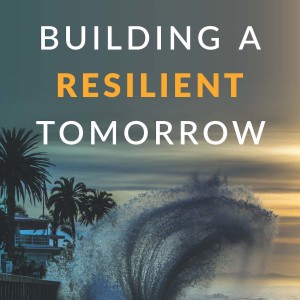
- Alice. C Hill, a senior fellow for Climate Change Policy at the Council on Foreign Relations. Over 10 years ago she joined the Obama administration as senior legal counsel to Homeland Security director, Janet Politano. As a climate change resilience expert, She believes we possess the tools to respond to the impacts of climate change. She and Martinez-Diaz co-authored the book, Building a Resilient Tomorrow: How to Prepare fo the Coming Climate Disruption.
In discussing the connections they see regarding our preparations for and responses to protecting the public from Covid-19 and the impacts of climate change, they point out that governments do not properly plan for unexpected future events because of a collective failure of imagination. Martinez-Diaz explains the idea of availability bias, “the difficulty that we all have to imagine things we have never seen before. Therefore, we have a lot trouble planning and getting ready for things for which we have no living memory.” This was true of Coronavirus and is also true for climate change.
In responding to crisis and suffering, they each point out the importance of having empathy towards those who are at risk, particularly the most vulnerable in society. This thoughtful and insightful conservation will help climate advocates better understand the work we seek to do in effectively communicating the urgency of climate change. Being able to tell stories to government officials and other stakeholders is a necessary skill to develop and hone.
The Art House
Hear the story of Yuri Ivanovich Petrov. As a boy he survived the infamous 900 Days Siege of Leningrad during World War II. Though he experienced the unimaginable hardships, he also developed inventive ways to survive. The lessons he learned during the greatest crisis of his generation, can help give us hope and guidance for our own.
Puzzler Question
You are talking to your. friend, Charles. Charles is concerned about climate change but doesn’t know what we could do about it. You explain carbon pricing is a powerful tool to help us decrease fossil fuel emissions. Before you could say more your Charles interrupts, “Are you out of your mind? Did you see what happened in France when they tried that. Those Yellow Vest Protest! It was a political disaster! You really expect that to work here?”
How would you respond to Charles?
Send your answers to Peterson by April, 15, 2020. You can email your responses to radio @ citizensclimate.org r leave a voicemail of 3 minutes or less at 518.595.9414. (+1 if calling from outside the USA.)
Dig Deeper
- What would happen if the world reacted to climate change lit it’s reacting to coronavirus? What would a fast, coordinated, collective response to climate change look like? by Adele Peters for Fast Company
- Coronavirus Shows Up Rapid Global Response to Climate Change Is Possible by Jamie Margolin for Teen Vogue
- America Adapts Podcast: The Climate Change Podcast
- That Discomfort You’re Feeling is Grief by Scott Berinato for the Harvard Business Review
- The Siege of Leningrad from Eyewitness to History
Friday Mar 27, 2020
Friday Mar 27, 2020
Join CCL's Communications Director Flannery Winchester for a training that explores news coverage in the media - articles, press, and media awareness which mentions our organization and CCL's work earned outside of paid advertising. Flannery reviews strategies for generating news coverage with your local chapter and the support of CCL's national communications team.
Skip ahead to the following section(s):
Writing Media in the COVID Era (2:45)
What is news coverage? Why now? (7:16)
How to alert media to your story (12:12)
Develop your local media list (16:18)
Pitching and next steps (30:52)
Presentation Slides: https://cclusa.org/generating-media-coverage
CCL Community Training Page: https://community.citizensclimate.org/resources/item/19/293
Follow us on Facebook: http://facebook.com/citizensclimatelobby
Twitter: http://twitter.com/citizensclimate/
Friday Mar 20, 2020
Friday Mar 20, 2020
Join CCL's Field Development Director Elli Sparks & Volunteer Education Coordinator Brett Cease for a training that walks through the process of setting up and hosting an online group meeting on Zoom. For those interested in minimizing public meetings, hosting online meetings offer a safe alternative to meeting in person and this training walks through the considerations to get you started.
Skip ahead to the following section(s):
Setting Up For Success (3:10)
Practicing With Zoom (14:36)
+Audio Controls (18:30)
+Video Controls (22:24)
+Renaming Users (23:18)
+Monitoring Chat (24:24)
+Claiming Host Key (26:45)
+Sharing Screen (28:24)
+Breakout Rooms (31:06)
+Ending The Meeting (34:37)
+Additional Controls (35:20)
Where To Go For Technical Support (40:45)
Suggestions For Engagement (44:05)
Presentation Slides: http://cclusa.org/hosting-zoom-meetings
CCL Community Training Page: https://community.citizensclimate.org/resources/item/19/347
Follow us on Facebook: http://facebook.com/citizensclimatelobby
Twitter: http://twitter.com/citizensclimate/
Saturday Mar 14, 2020
Saturday Mar 14, 2020
Hannah Pickard trains people in proven communications techniques that shift the national conversation about climate change to be more positive, civic-minded and solutions-focused. She is the Network Manager for the National Network for Ocean and Climate Change Interpretation. NNOCCI currently supports climate communicators in 184 institutions in 38 states. As we go out in our communities to lead presentations, Hannah’s coaching can help us to inspire audiences to take action and be part of the solution.
More Information: NNOCCI: https://climateinterpreter.org/about/projects/NNOCCI
Hannah's Slides & March's Monthly Actions: https://cclusa.org/actionsheet
Citizens' Climate Radio Episode 39 featuring Hannah Pickard: https://citizensclimatelobby.org/citizens-climate-radio-ep-39-envisioning-and-communicating-climate-success/
Coronavirus Forums: https://community.citizensclimate.org/discuss/viewcategory/2762